
Most people still associate oral pouches with nicotine. At the same time, most adults already get caffeine another way: coffee. Caffeine pouches sit somewhere between those two habits. They use the small, discreet format made familiar by nicotine pouches, but the active ingredient is caffeine - the same stimulant found in coffee, tea, and energy drinks.
That gives them two obvious use cases. For someone who likes the convenience of a pouch but doesn't want nicotine, they offer a nicotine-free pouch option. For someone who wants caffeine but doesn't always want another drink, they offer a compact alternative to coffee or energy drinks. Neither idea requires caffeine pouches to “replace” anything completely. Sometimes the advantage is simply having another option.

What Are Caffeine Pouches?
Caffeine pouches are small oral pouches containing a measured amount of caffeine. They are placed between the lip and gum, where moisture from the mouth releases the ingredients. The pouch is removed and discarded after use rather than chewed or swallowed. Some formulas are simple: caffeine, flavoring, sweetener, and the ingredients needed to make the pouch. Others combine caffeine with ingredients such as L-Theanine, L-Tyrosine, Alpha GPC, vitamins, or botanical compounds. Those broader formulas may also be marketed as energy pouches or nootropic pouches.
The important information is on the label. How much caffeine is in each pouch? Does it contain nicotine? What other active ingredients are included, and are their amounts clearly listed? Two cans can look almost identical and contain very different products.
Why the Pouch Format Is Interesting
The obvious advantage is convenience. A pouch is small enough to carry in a pocket, doesn't require refrigeration or preparation, and doesn't leave you holding a cup or can for the next 30 minutes. But there's another reason the format is interesting: the inside of the mouth can absorb certain ingredients directly. The tissue between the lip and gum is part of the oral mucosa and has a good blood supply. As caffeine is released from an oral product, some can potentially pass through this tissue while some is swallowed with saliva and absorbed later through the digestive system.
Direct research on finished caffeine pouches is still limited, so claims that every pouch delivers caffeine within a specific number of minutes would go too far. However, studies of caffeine chewing gum provide useful evidence for the principle. In one controlled study, caffeine from gum was absorbed significantly faster than caffeine from capsules, with researchers suggesting absorption through the buccal lining of the mouth as an explanation.
So the practical advantage isn't that the pouch somehow creates “stronger caffeine.” It's that caffeine can begin becoming available while the product is still in your mouth rather than relying entirely on digestion after swallowing.

An Alternative for People Who Don't Want Nicotine
This is probably the biggest reason caffeine pouches have room to become their own category. Nicotine pouches made the oral-pouch format familiar. At the same time, nicotine is highly addictive, and nicotine pouches are not FDA-approved smoking-cessation products. Some people may like the practical parts of that format - the small can, no smoke or vapor, discreet use, and portability - without wanting nicotine itself.
Caffeine pouches separate the format from the ingredient. Instead of delivering nicotine, they provide caffeine. That makes them one type of nicotine-free pouch, alongside caffeine-free, nootropic, botanical, and other functional formulas.
We covered that broader category in our earlier guide, Beyond Nicotine: A Look at Nicotine-Free Pouches.
It's important not to confuse this with nicotine cessation. A caffeine pouch isn't a medication for quitting nicotine, and someone trying to stop nicotine use should use evidence-based cessation guidance. The appeal here is simpler: if you want a pouch but don't want nicotine in it, there are now other choices.
An Alternative When You Don't Want Another Coffee
The other use case starts with a much more familiar habit. Coffee is everywhere. According to the National Coffee Association's 2026 data, 66% of American adults drink coffee on a typical day. Earlier 2026 survey data found that 86% of past-day coffee drinkers had coffee first thing in the morning, but 22% also drank it in the afternoon. For many people, coffee works perfectly well. A caffeine pouch isn't automatically “better.”
But coffee comes with a format of its own. You need the drink. It has to be brewed, bought, carried, or stored. It may be hot when you want something quick, or you may simply not want another 12 ounces of liquid. That's where a caffeine pouch can be useful. You can carry a small can in a pocket or bag. There's no brewing, no cup, no spill, and no need to finish a whole beverage just because you want caffeine.
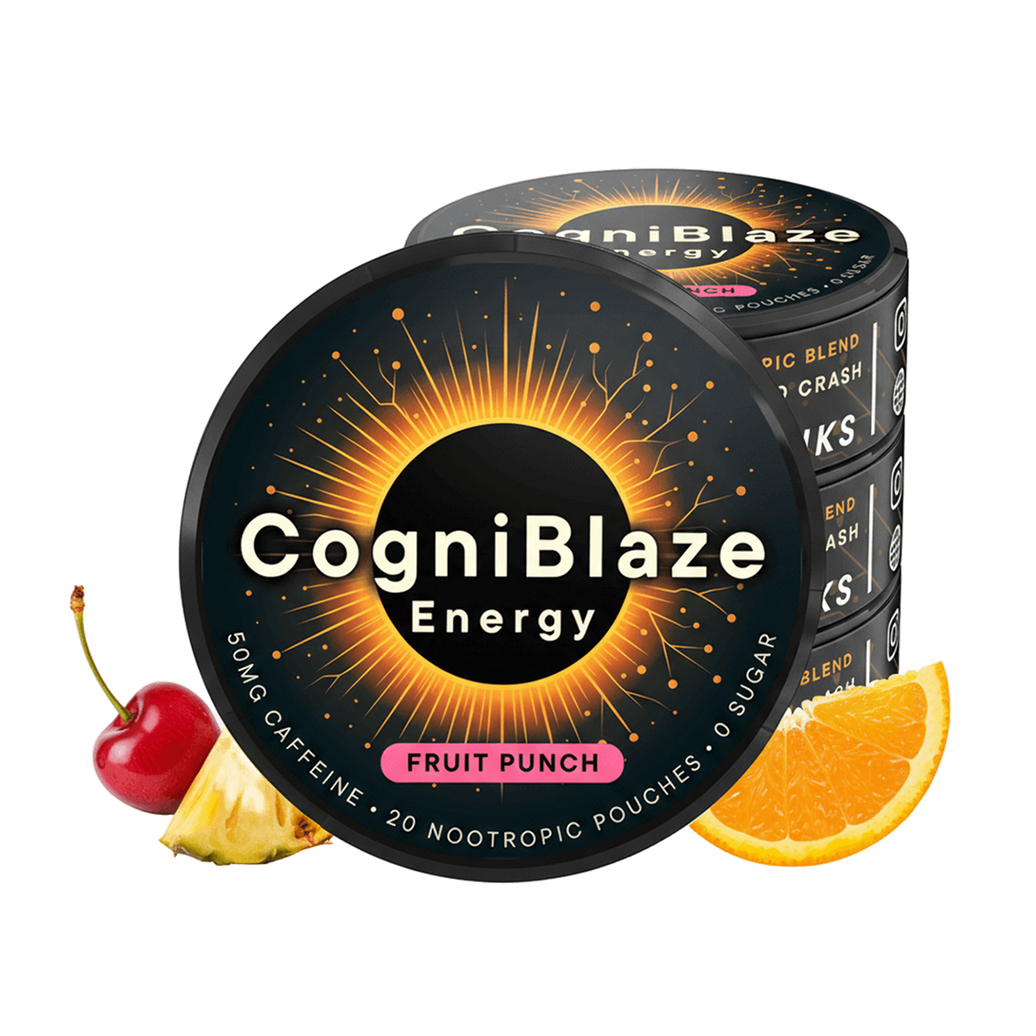
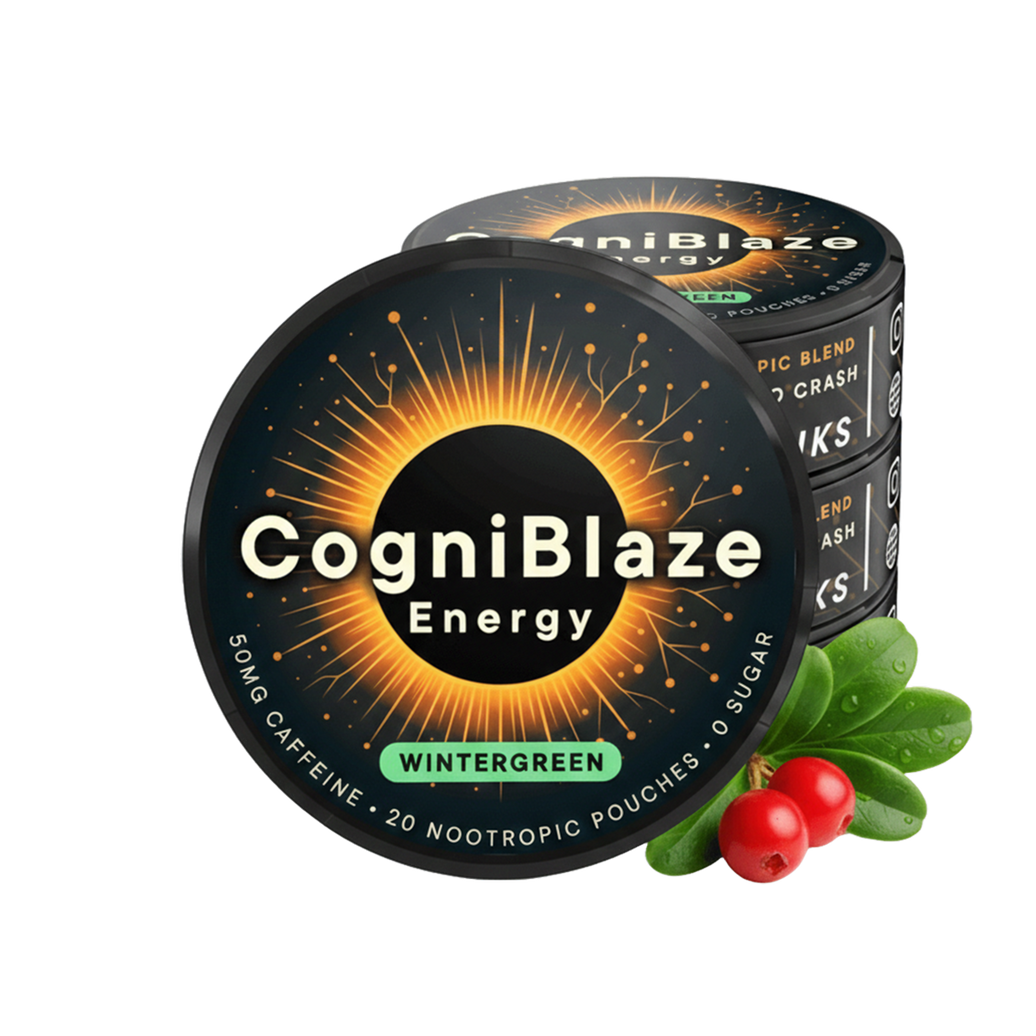
The caffeine amount can also be straightforward. CogniBlaze Energy Pouches, for example, contain 50 mg of caffeine per pouch. That makes it easy to know what one pouch adds to your day. By comparison, the FDA says two to three 12-ounce cups of coffee can add up to about 400 mg of caffeine, although actual coffee caffeine levels vary significantly. The point isn't that 50 mg is the “right” amount. It's that a clearly measured pouch gives you a known amount without estimating how strong today's coffee happens to be.
Coffee and Caffeine Pouches Don't Have to Be Either/Or
This is worth emphasizing because “alternative” often gets interpreted as “replacement.” A caffeine pouch doesn't have to replace coffee entirely. Someone might still enjoy coffee in the morning because they like the taste and ritual, then use a pouch later when sitting in traffic, traveling, working somewhere without coffee nearby, or simply not wanting another drink. That is probably a more realistic way to think about the category.
Coffee is partly about caffeine, but it is also about taste, warmth, routine, cafés, and social habits. A pouch isn't trying to recreate those things. It solves a different problem: how do I get a measured amount of caffeine when I don't want or can't conveniently have another beverage?
How Much Caffeine Is Actually in a Pouch?
There is no industry-wide standard. Different caffeine pouches contain different amounts, which makes the milligrams per pouch one of the most important numbers on the label. A 50 mg pouch, for example, is a relatively easy number to work with. Two pouches equal 100 mg. Four equal 200 mg.
But the number of pouches isn't the only thing that matters. The FDA says that for most adults, 400 mg of caffeine per day is an amount not generally associated with negative effects. Individual sensitivity varies considerably depending on factors such as medications, medical conditions, body weight, and personal caffeine sensitivity. And that 400 mg refers to the whole day, from every source combined.
The Daily Total Is Easy to Forget
This matters particularly with pouches because they're small. Suppose someone starts the day with coffee, uses a caffeine pouch around lunch, has another later in the afternoon, then drinks an energy drink before the gym. Each individual choice might seem moderate, but all of the caffeine still goes into the same daily total.
Coffee, tea, soda, energy drinks, pre-workout products, chocolate, supplements, medications, and caffeine pouches can all contribute. A pouch doesn't somehow create its own separate caffeine allowance. That is why good caffeine-pouch labeling should tell you the amount per pouch, not merely the caffeine content of an entire can or a vaguely defined blend. And 400 mg should not be treated as a goal. Someone who feels uncomfortable after 150 or 200 mg shouldn't try to work their way toward 400 simply because the FDA cites that figure for most adults.

What Does Caffeine Actually Do?
Caffeine primarily works by blocking adenosine receptors. Adenosine is involved in the increasing feeling of sleep pressure that builds as you're awake. Blocking that signal is one reason caffeine can make you feel more alert. The evidence isn't based only on decades of coffee drinking. A 2025 systematic review and meta-analysis looked at 31 randomized controlled trials involving healthy adults and found that caffeine improved both attention accuracy and reaction time.
That doesn't mean more caffeine always produces more focus. Individual responses vary, and larger amounts can bring unwanted effects such as restlessness, jitteriness, difficulty sleeping, or a racing heartbeat. Caffeine is familiar, but it's still an active stimulant.
Caffeine Pouches vs. Nicotine Pouches
From a few feet away, the products may look nearly identical. Both can come in round cans. Both contain small white pouches. Both are used between the lip and gum. What changes is the active ingredient and the reason for using it. Nicotine pouches contain nicotine. Nicotine is highly addictive, and repeated use can create dependence.
Caffeine pouches contain caffeine and are generally intended for energy or alertness. Regular caffeine use can lead to tolerance and withdrawal symptoms, but that is not the same dependence profile associated with nicotine.
For someone deliberately looking for nicotine-free pouches, checking the label matters. “Tobacco-free” alone isn't enough because nicotine pouches can contain nicotine without containing tobacco leaf. The simple question is: does the product actually say nicotine-free?
Where Do Energy Pouches and Nootropic Pouches Fit?
The terminology overlaps because these names describe different parts of the formula. A caffeine pouch tells you that caffeine is present. An energy pouch usually describes what the product is designed to provide. A nootropic pouch generally contains ingredients associated with focus, attention, or cognitive performance and may contain caffeine or be caffeine-free.
That means one nicotine-free pouch containing caffeine, L-Theanine, Alpha GPC, and L-Tyrosine can reasonably fit all three descriptions. It isn’t three different products, just three ways of describing what’s inside and what the formula is intended to do.
If you want a deeper breakdown of that category, see What Are Nootropic Pouches? Ingredients, Uses & What to Know.
There are also focus pouches and caffeine-free pouches that use functional ingredients without caffeine. The simplest way to make sense of the category is to ask three questions: does it contain nicotine, how much caffeine does it contain, and what other active ingredients are in the formula?
What Should You Look for Before Choosing One?
A good caffeine pouch should make its formula easy to understand. Start with the amount of caffeine per pouch. Then look at any other active ingredients and their individual amounts. Check whether it is explicitly nicotine-free, what sweeteners are used, the recommended maximum use, warnings, and where the product is manufactured. If you're buying a broader nootropic pouch, don't assume that a long ingredient list automatically means a stronger or better formula. Clear amounts are more useful than ten ingredients hidden inside a proprietary blend.
Also think about how the product fits into your existing habits. If you already drink several coffees each day, adding caffeine pouches without reducing anything else could simply push your total intake higher. If what you really want is the pouch format without additional caffeine, a caffeine-free focus pouch may make more sense.

Where Caffeine Pouches Fit in Real Life
The appeal becomes easier to understand when you stop treating caffeine pouches as a strange version of coffee. Imagine a long drive where you don't want another gas-station drink. A meeting where carrying coffee isn't practical. A flight where you're trying to travel light. An afternoon at work when you've already had two cups of coffee but want a smaller, clearly measured amount of caffeine.
Or imagine someone who previously associated pouches entirely with nicotine but now wants the same discreet format without nicotine at all. Those are two different problems, and caffeine pouches can fit both.
At CogniBlaze, our Energy Pouches contain 50 mg of caffeine per pouch, along with L-Theanine, Alpha GPC, and L-Tyrosine. They're nicotine-free, tobacco-free, zero sugar, and designed for a measured energy-and-focus option in pouch form.
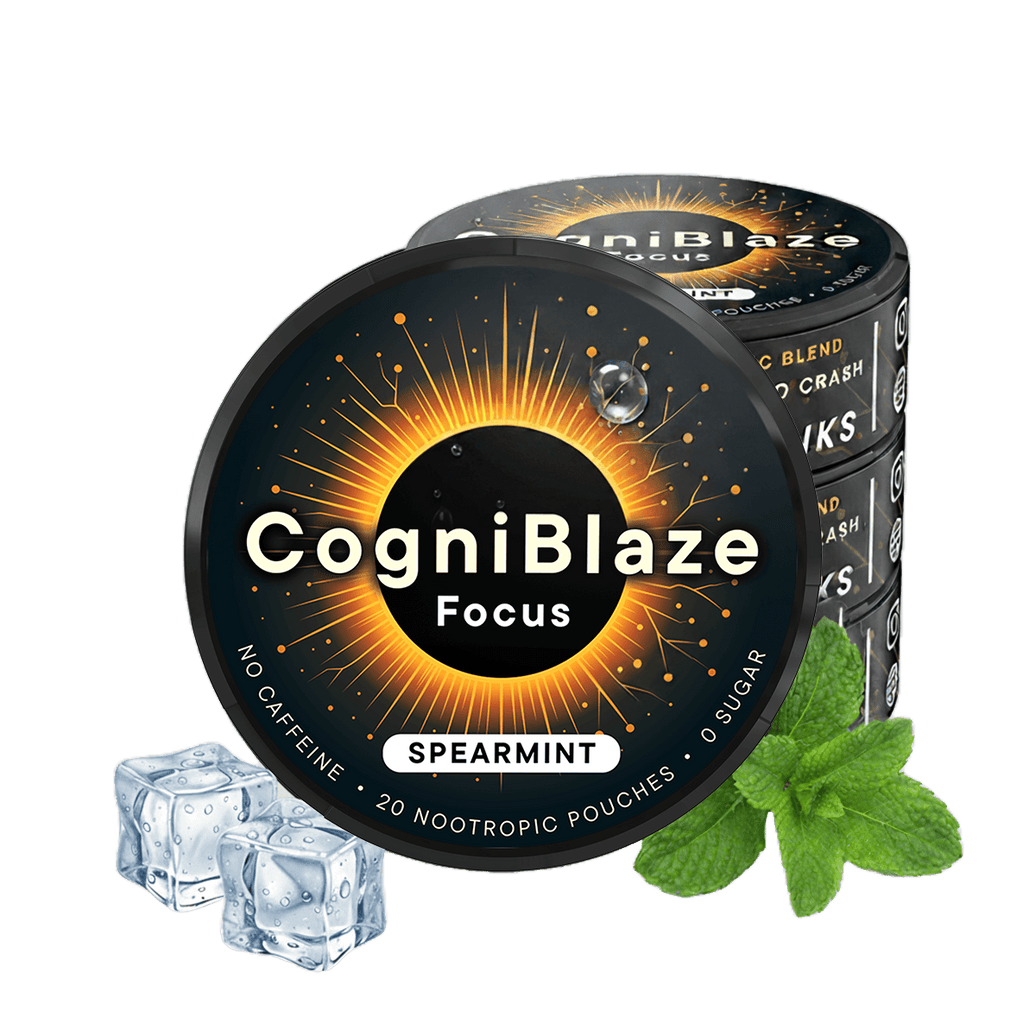
Our Focus Pouches take a different approach: no nicotine and no caffeine, using Alpha GPC, L-Theanine, L-Tyrosine, and Huperzine A.
That's where the category seems to be heading. A pouch is becoming less defined by the ingredient people first associated with it and more by the purpose of the formula inside. For some people, that means a pouch without nicotine. For others, it means caffeine without another coffee. And sometimes, it means both.
This article is for general educational purposes and is not intended as medical advice.
Sources & Further Reading
1. Spilling the Beans: How Much Caffeine Is Too Much? — U.S. Food & Drug Administration
FDA: Caffeine Guidance
2. Nicotine Pouches — Centers for Disease Control and Prevention
CDC: Nicotine Pouches
3. Nicotine Is Why Tobacco Products Are Addictive — U.S. Food & Drug Administration
FDA: Nicotine and Addiction
4. The Rate of Absorption and Relative Bioavailability of Caffeine Administered in Chewing Gum Versus Capsules — International Journal of Pharmaceutics
PubMed — PMID 11839447
5. A Systematic Review and Meta-Analysis of the Acute Effect of Caffeine on Attention — Psychopharmacology, 2025
PubMed — PMID 40335666
6. National Coffee Data Trends — National Coffee Association, 2026
National Coffee Association: Coffee Consumption Trends
7. Coffee Tops Americans' Beverage Choices — National Coffee Association, 2026
National Coffee Association: 2026 Coffee Consumption Data