
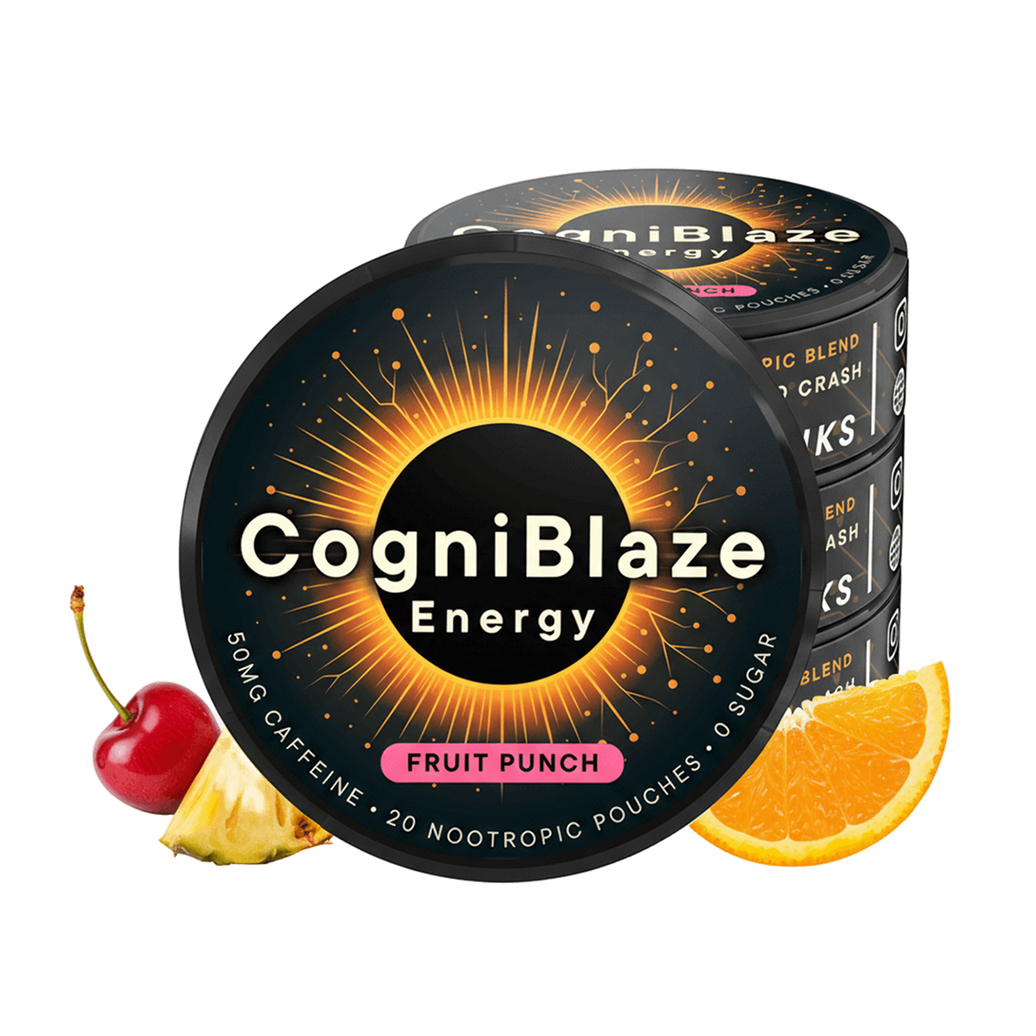
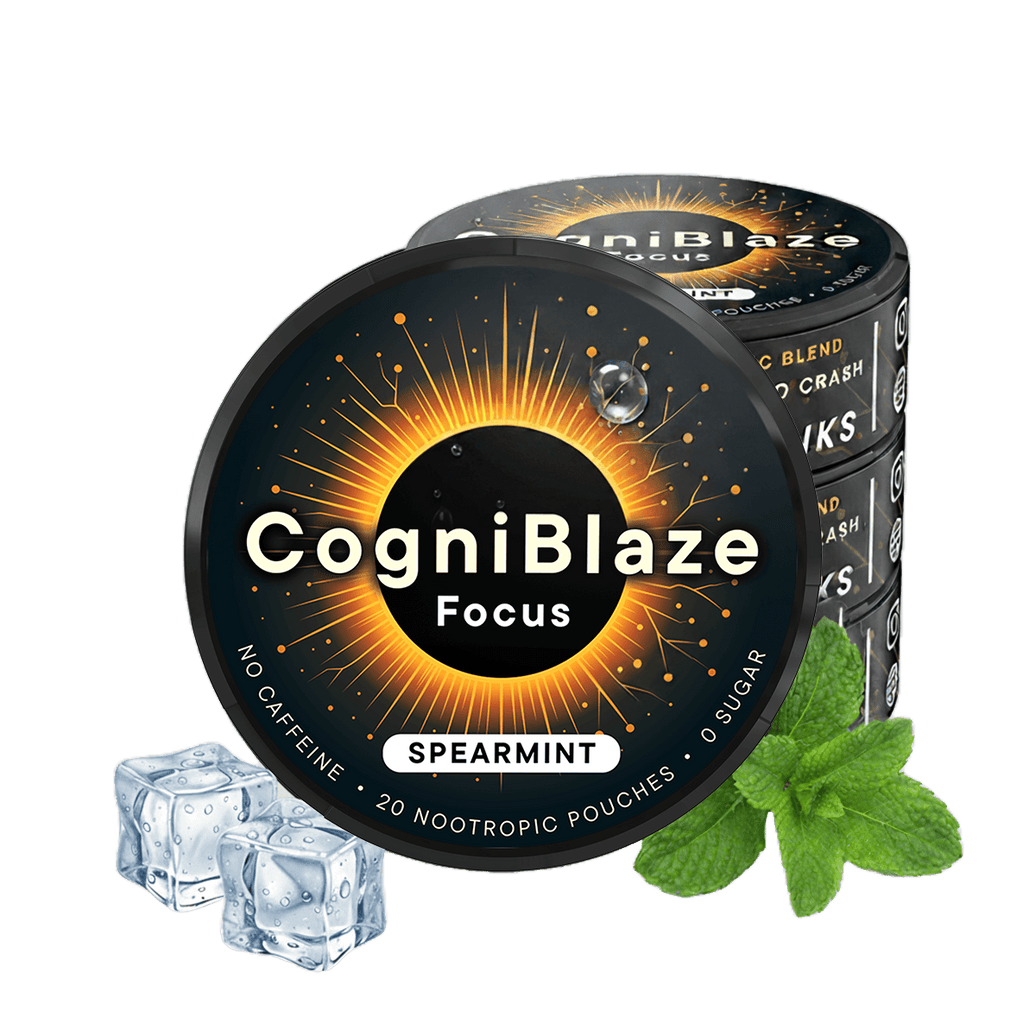
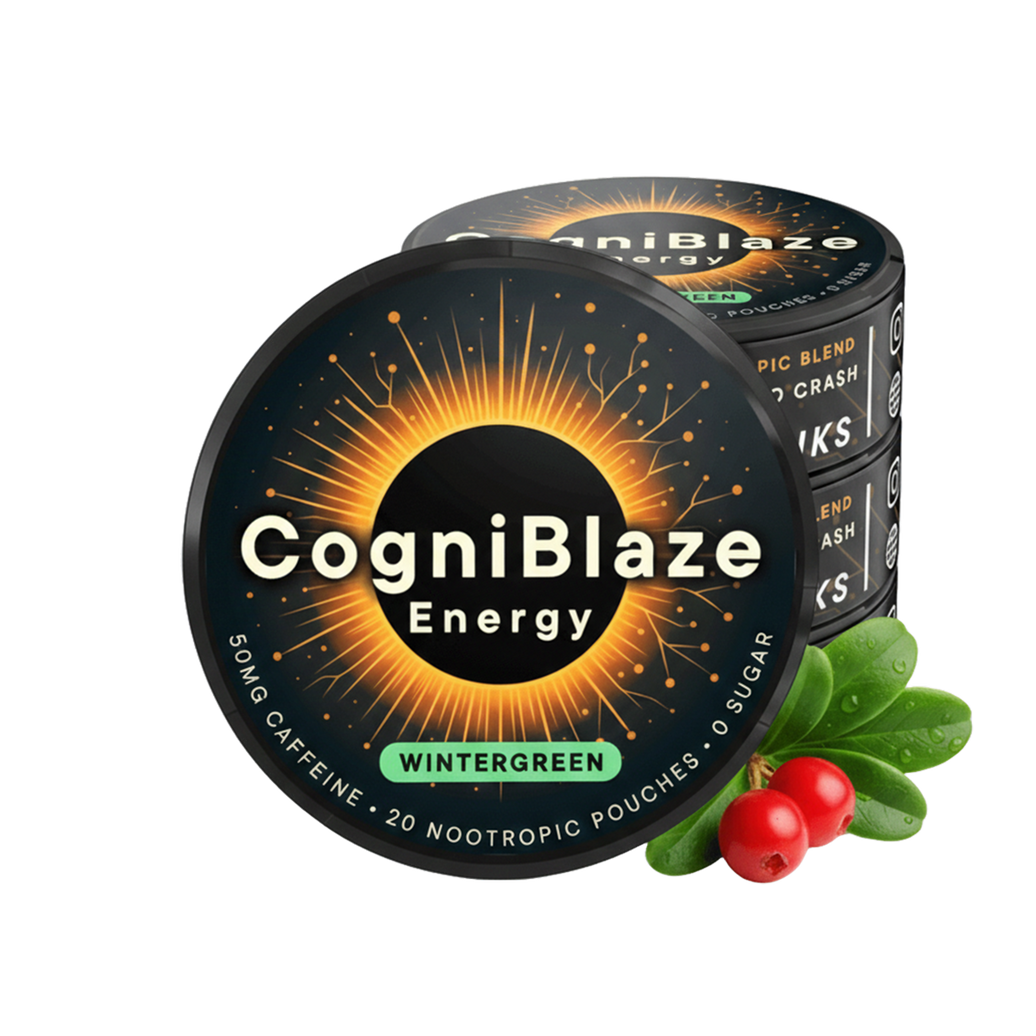

Nootropic pouches are small oral pouches made with ingredients commonly used to support alertness, focus, and other aspects of mental performance. They are placed between the lip and gum, making them a convenient option for people who want functional ingredients without mixing a drink, swallowing a capsule, or carrying around a bottle.
Depending on the formula, nootropic pouches may contain caffeine, amino acids, choline-related compounds, plant-derived ingredients, or a combination of several ingredients. Some are designed primarily as energy pouches, while others focus on mental performance without caffeine. They also shouldn't be confused with nicotine pouches. A nootropic pouch can be completely nicotine-free and tobacco-free.
So what exactly is inside these pouches, and what should you look for when choosing one? Here's the straightforward version.
What Does “Nootropic” Mean?
The term nootropic is broadly used for substances associated with cognitive functions such as attention, memory, learning, alertness, and mental performance. It's a wide category rather than one specific type of ingredient. The term has been around since the 1970s, but modern use of “nootropic” has expanded considerably. Today, you'll see it applied to everything from caffeine and amino acids to botanical extracts and choline-related compounds.
That doesn't mean every ingredient marketed as a nootropic has the same level of scientific evidence. Research varies widely depending on the ingredient, dose, population being studied, and the specific cognitive function being measured. Reviews of cognitive-enhancing supplements have repeatedly noted that evidence for many ingredients in healthy adults remains mixed or limited. A nootropic pouch is simply a different delivery format for these types of ingredients.
How Do Nootropic Pouches Work?
Nootropic pouches look similar in format to other oral pouches. You place a pouch between your lip and gum and leave it there according to the product's directions. There is no drink to prepare and no capsule to swallow. That makes the pouch format useful when you're working, traveling, studying, driving, or simply don't want another coffee or energy drink. What you actually feel from a pouch depends much more on its ingredients than on the pouch itself. A caffeinated formula, for example, can feel noticeably different from a caffeine-free formula. The amount of each ingredient matters as well, so two products both labeled “nootropic pouches” can have very different formulas. That's why it's worth reading the ingredient panel instead of relying only on the front of the package.

Do All Nootropic Pouches Have Caffeine?
No. This is another important distinction because nootropic pouches can generally be formulated in two ways: with caffeine or without it.
Caffeinated Nootropic Pouches
Caffeine pouches combine the convenience of an oral pouch with caffeine and, depending on the product, other functional ingredients. Caffeine has far more research behind it than many ingredients marketed for cognitive performance. Studies consistently show effects on alertness and attention, although individual responses vary. These formulas make the most sense for someone specifically looking for energy and focus.
Caffeine-Free Nootropic Pouches
Caffeine-free pouches take a different approach. Instead of relying on a stimulant, they use other ingredients and are intended for people who want a focus-oriented formula without adding more caffeine to their day. They may also make more sense later in the day or for people who simply prefer to limit caffeine. “Caffeine-free,” however, does not automatically mean a product will have a particular effect. The actual ingredients and amounts still matter.

Energy Pouches vs. Focus Pouches
You'll often see considerable overlap between energy and focus products, but there's a useful distinction.
Energy pouches typically include caffeine or another stimulant component, with the goal of combining increased alertness with ingredients commonly included in focus formulas.
Focus pouches don't necessarily need caffeine. A caffeine-free focus pouch may instead use amino acids, choline-related ingredients, or other compounds without relying on a stimulant. Neither approach is inherently better. It depends on what you're looking for. If you already drink several cups of coffee each day, adding more caffeine may not make sense. If you're looking for an alternative to another coffee or energy drink, a measured caffeine pouch may be more convenient. The important part is knowing which type you're using rather than treating every nootropic pouch as interchangeable.
What Should You Look for in a Nootropic Pouch?
Start with the label. Look at the active ingredients, how much of each ingredient you're getting, whether caffeine is included, and how much caffeine is in each pouch. Also check for nicotine, sugar, sweeteners, serving directions, and any relevant warnings. Be particularly aware of your total caffeine intake from all sources, not just the pouch.
The FDA says that for most adults, 400 mg of caffeine per day is an amount not generally associated with negative effects. But sensitivity varies considerably from person to person, and certain medications, health conditions, pregnancy, and other factors can affect how someone responds to caffeine. More isn't automatically better. A clearly labeled formula makes it much easier to know what you're actually using.
Do Nootropic Pouches Contain Nicotine?

Not necessarily. Nootropic pouches and nicotine pouches describe two different product concepts. Nicotine pouches are built around nicotine. Nootropic pouches are built around functional ingredients associated with things like energy, attention, or focus. A nootropic pouch can therefore be completely nicotine-free and tobacco-free. If avoiding nicotine is important to you, don't assume every oral pouch is nicotine-free just because it contains nootropics. Check the label and make sure the product clearly states whether nicotine is present. CogniBlaze nootropic pouches contain no nicotine and no tobacco.
How Do You Use Nootropic Pouches?
Nootropic pouches are designed to be simple. Place one pouch between your lip and gum and use it according to the instructions on the package. The pouch stays intact during use and is removed and disposed of afterward. Don't chew or swallow the pouch itself. How long you keep one in and how often you use one depends on the specific product, so always follow its directions rather than assuming all pouch brands work the same way.
For caffeinated products in particular, keep track of caffeine from coffee, tea, energy drinks, supplements, and other sources during the day.
Are Nootropic Pouches Right for Everyone?
No functional product is right for everyone. Caffeine sensitivity alone varies significantly. One person may feel comfortable after a moderate amount of caffeine while another may experience restlessness, difficulty sleeping, increased heart rate, or other unwanted effects. The FDA specifically recommends considering individual sensitivity and total caffeine consumption.
It's also important to remember that research on many ingredients commonly described as nootropics is still evolving. Evidence supporting one ingredient shouldn't automatically be applied to every nootropic blend or every claim made about it. If you're pregnant or nursing, have a medical condition, take medications, or have questions about whether an ingredient is appropriate for you, speak with a qualified healthcare professional.
A Different Way to Get Energy or Focus Ingredients
The main advantage of nootropic pouches isn't that they somehow make familiar ingredients completely different. It's the format. They are small, portable, discreet, and don't require water or preparation. Depending on the formula, they can provide caffeine and other functional ingredients or offer a caffeine-free alternative.
At CogniBlaze, we make nicotine-free nootropic pouches in two types.
Our Energy Pouches combine caffeine with L-Theanine, Alpha GPC, and L-Tyrosine for people looking for an energy-and-focus formula.
Our Focus Pouches are caffeine-free and combine Huperzine A, L-Theanine, Alpha GPC, and L-Tyrosine for people who want a nootropic pouch without caffeine.
Both are made without nicotine or tobacco and contain zero sugar. The best place to start is simple: decide whether you want caffeine or caffeine-free, read the ingredients, and choose the formula that fits what you're actually looking for.
This article is for general educational purposes and is not intended as medical advice.
Sources & Further Reading:
- Benefits and Harms of 'Smart Drugs' (Nootropics) in Healthy Individuals — Drugs, 2022 PubMed — PMID 35366192
- A Systematic Review and Meta-Analysis of the Acute Effect of Caffeine on Attention — Psychopharmacology, 2025 PubMed — PMID 40335666
- Dose-Response Effect of L-Theanine on Psychomotor Speed, Sustained Attention, and Inhibitory Control: A Double-Blind, Placebo-Controlled, Crossover Study — Nutritional Neuroscience, 2023 PubMed — PMID 36263942
- Effect of Tyrosine Supplementation on Clinical and Healthy Populations Under Stress or Cognitive Demands—A Review — Journal of Psychiatric Research, 2015 PubMed — PMID 26424423
- Acute Alpha-Glycerylphosphorylcholine Supplementation Enhances Cognitive Performance in Healthy Men — Nutrients, 2024 PubMed — PMID 39683633
- The Effects of Huperzine A on Dementia and Mild Cognitive Impairment: An Overview of Systematic Reviews — Phytotherapy Research, 2021 PubMed — PMID 33851462
- Spilling the Beans: How Much Caffeine is Too Much? — U.S. Food & Drug Administration FDA — Caffeine Guidance