
For a long time, the word pouch was closely associated with nicotine. That is changing. Today, there is a growing range of nicotine-free pouches made with ingredients such as caffeine, amino acids, choline-related compounds, botanical ingredients, flavors, and other functional ingredients. Some are designed for energy, others for focus, and some simply offer the convenience of an oral pouch without nicotine. The format may look familiar, but what’s inside can be very different. That distinction matters because terms like nicotine-free, tobacco-free, caffeine-free, and nootropic don’t all mean the same thing.
Here’s what to know:

What Are Nicotine-Free Pouches?
Nicotine-free pouches are oral pouches that do not contain nicotine. They’re typically placed between the lip and gum and used for a set period of time before being removed and discarded. There is no need to chew or swallow the pouch. Beyond that basic format, there isn’t one standard nicotine-free pouch formula. One product might contain caffeine. Another might use amino acids or other ingredients commonly found in nootropic pouches. Others may be built around botanical ingredients, flavor, or a combination of functional ingredients. That’s why nicotine-free pouches are better thought of as a broad category rather than one specific type of product. “Nicotine-free” tells you what is not in the pouch. The ingredient panel tells you what actually is.

Nicotine-Free and Tobacco-Free Don’t Mean the Same Thing
This is one of the easiest distinctions to miss. A product can be tobacco-free and still contain nicotine. Nicotine pouches generally do not contain tobacco leaf, but they do contain nicotine. According to the FDA, the nicotine used in these products may be derived from tobacco or produced synthetically. The CDC also describes nicotine pouches as products containing nicotine along with flavorings and other ingredients.
So, nicotine-free means the product contains no nicotine, while tobacco-free generally means it does not contain tobacco leaf. A nicotine pouch can therefore be tobacco-free without being nicotine-free. If avoiding nicotine is important to you, look specifically for a product labeled nicotine-free or no nicotine rather than relying on “tobacco-free” alone.
Why Does the Nicotine Distinction Matter?
Nicotine isn’t simply another flavor or functional ingredient. It is highly addictive. The FDA identifies nicotine as the primary reason tobacco products are addictive, while the CDC notes that nicotine can be particularly concerning for young people and during pregnancy. That is why it makes sense to treat nicotine-free pouches and nicotine pouches as separate categories even though the physical products may look similar.
At the same time, “nicotine-free” does not mean a pouch is automatically stimulant-free. Some nicotine-free products are caffeine pouches, while others are caffeine-free pouches or use different functional ingredients altogether. Checking the full label is still important.

What Can Be Inside a Nicotine-Free Pouch?
There is no universal ingredient list. Depending on the product, nicotine-free pouches may contain caffeine, amino acids, choline-related compounds, botanical ingredients, flavorings, sweeteners, and other components needed for the formula. A few types are becoming especially common.
Caffeine Pouches
Caffeine pouches use caffeine as a main active ingredient and offer another way to consume a measured amount of caffeine without drinking coffee or an energy drink. Some formulas keep things simple, while others combine caffeine with ingredients commonly found in nootropic or focus formulas.
Caffeine is one of the better-studied ingredients used for alertness and attention. A 2025 systematic review and meta-analysis of 31 randomized controlled trials found that caffeine improved both attention accuracy and reaction time in healthy adults. The amount of caffeine per pouch can vary considerably, so checking the label matters. The FDA says that for most adults, 400 mg of caffeine per day is an amount not generally associated with negative effects, although individual sensitivity varies. Caffeine from pouches should be counted alongside coffee, tea, energy drinks, supplements, and other sources.
Products built mainly around caffeine and alertness are also sometimes described as energy pouches. The name may differ from one brand to another, which is another reason to focus on the actual ingredients and caffeine amount rather than the product name alone.
Nootropic Pouches
Nootropic pouches take a broader approach. They may contain ingredients commonly used in supplements intended for focus, attention, or other aspects of mental performance. Depending on the formula, these can include:
- L-Theanine
- L-Tyrosine
- Alpha GPC
- Huperzine A
- Caffeine
- Other amino acids or functional compounds
Some nootropic pouches contain caffeine and some do not. The word nootropic therefore does not automatically mean “energy product,” nor does it mean “caffeine-free.” Research also varies considerably between ingredients. Seeing “nootropic” on a package doesn’t tell you how strong the evidence is for every ingredient or how much of each ingredient is present. The ingredient panel remains the more useful source of information.
Caffeine-Free Pouches
Some products avoid both nicotine and caffeine. These caffeine-free pouches may appeal to people who want the pouch format without adding another stimulant to their day. A caffeine-free focus pouch, for example, may use amino acids, choline-related ingredients, or other functional compounds instead of caffeine. This can be useful for someone who already drinks coffee or prefers not to add caffeine later in the day. But “caffeine-free” should be understood literally: it tells you that caffeine is absent. It doesn’t describe every other ingredient in the formula.
How Do These Pouch Categories Fit Together?
The terminology can sound more complicated than it actually is because different labels describe different things.
Nicotine-free pouches tell you that nicotine is absent.
Caffeine pouches tell you that caffeine is present.
Caffeine-free pouches tell you that caffeine is absent.
Nootropic pouches describe a formula containing ingredients commonly associated with focus or cognitive performance.
Energy pouches and focus pouches usually describe what the product is intended for rather than a completely separate pouch format. That means a single product can reasonably fit more than one description. An energy pouch, for example, can also be nicotine-free, contain caffeine, and include nootropic ingredients. A focus pouch could be nicotine-free, nootropic, and caffeine-free.
The categories overlap because they answer different questions. Instead of trying to fit every pouch into one exclusive category, it’s more useful to look at the ingredients and decide whether the formula matches what you actually want.

What Should You Look for Before Choosing a Nicotine-Free Pouch?
Start with what’s actually inside it. A few things are worth checking:
- Whether it contains nicotine
- Whether it contains caffeine and how much
- Active ingredients and their amounts
- Sugar and sweeteners
- Serving instructions
- Recommended maximum use
- Relevant warnings
- Manufacturing information
Clear labeling is especially important with caffeine pouches and energy pouches, because the caffeine in each pouch becomes part of your total daily caffeine intake. It’s also worth avoiding the assumption that more active ingredients automatically make a better product. A longer ingredient list isn’t necessarily more useful than a simpler formula with clearly stated amounts.
If your main goal is focus without caffeine, a caffeine-free focus pouch may make more sense than an energy formula. If you specifically want caffeine and alertness, an energy pouch may be the more relevant category. The label should make that distinction easy to understand.
Are Nicotine-Free Pouches Smoking-Cessation Products?
Not automatically.
A nicotine-free pouch should not be treated as a product for quitting nicotine or tobacco simply because it contains no nicotine. Even nicotine pouches themselves should not be assumed to be smoking-cessation medications. FDA-approved smoking-cessation products are a separate category and include established medications and nicotine-replacement therapies specifically intended for that purpose. Someone trying to stop smoking or using nicotine should speak with a healthcare professional about evidence-based options rather than assuming a consumer pouch serves the same role.
Where Do Nootropic Pouches Fit In?
Nicotine-free nootropic pouches are one part of the broader nicotine-free pouch category. Instead of using nicotine, these formulas contain ingredients commonly found in energy, focus, and cognitive-performance supplements. Some nootropic pouches are also caffeine pouches and are designed more around energy and alertness. Others are caffeine-free pouches and put more emphasis on focus without caffeine.
Our earlier guide, What Are Nootropic Pouches? Ingredients, Uses & What to Know, goes deeper into ingredients such as caffeine, L-Theanine, L-Tyrosine, Alpha GPC, and Huperzine A and explains how different nootropic formulas are put together.
A Broader Pouch Category Is Taking Shape
The pouch format is no longer limited to nicotine. Consumers can now find nicotine-free pouches, caffeine pouches, nootropic pouches, energy pouches, focus pouches, and caffeine-free pouches, with considerable overlap between them. The names can help describe what a product is intended for, but they shouldn’t replace reading the label.
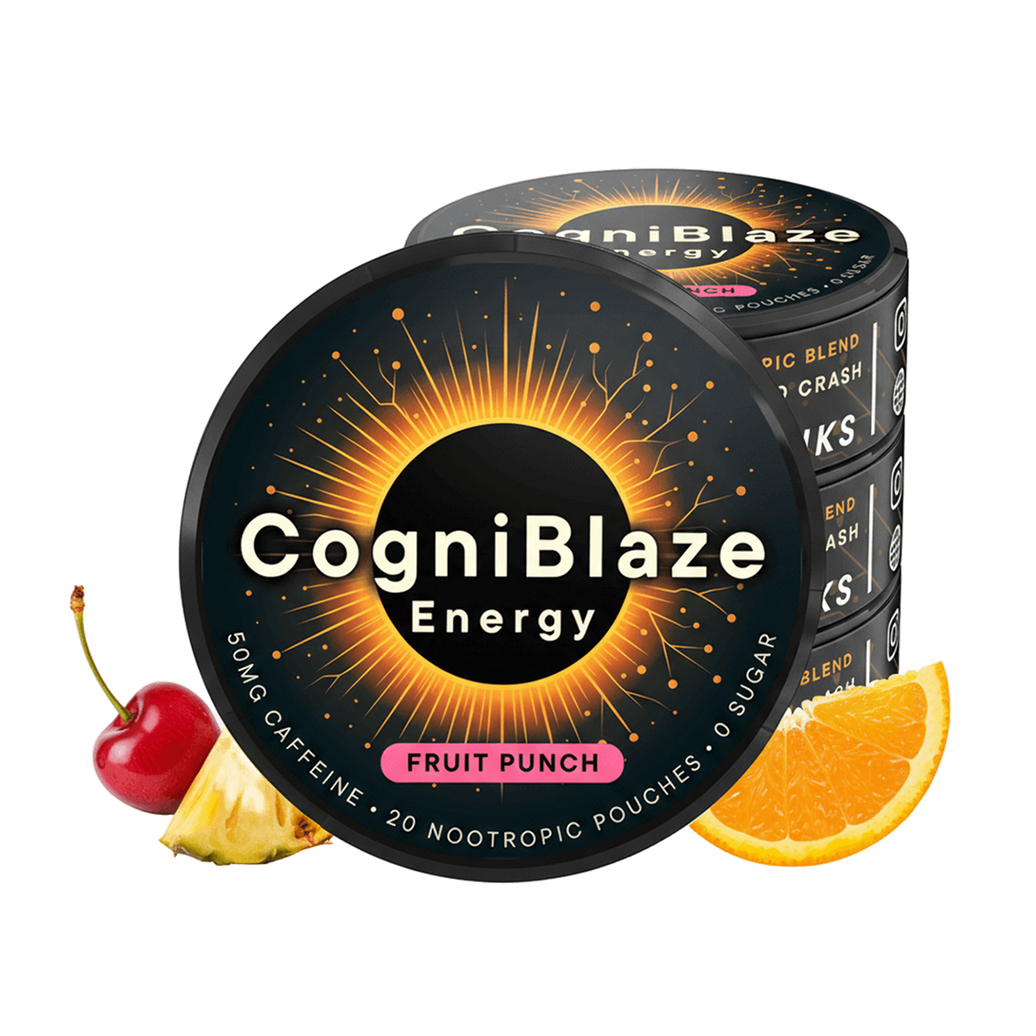
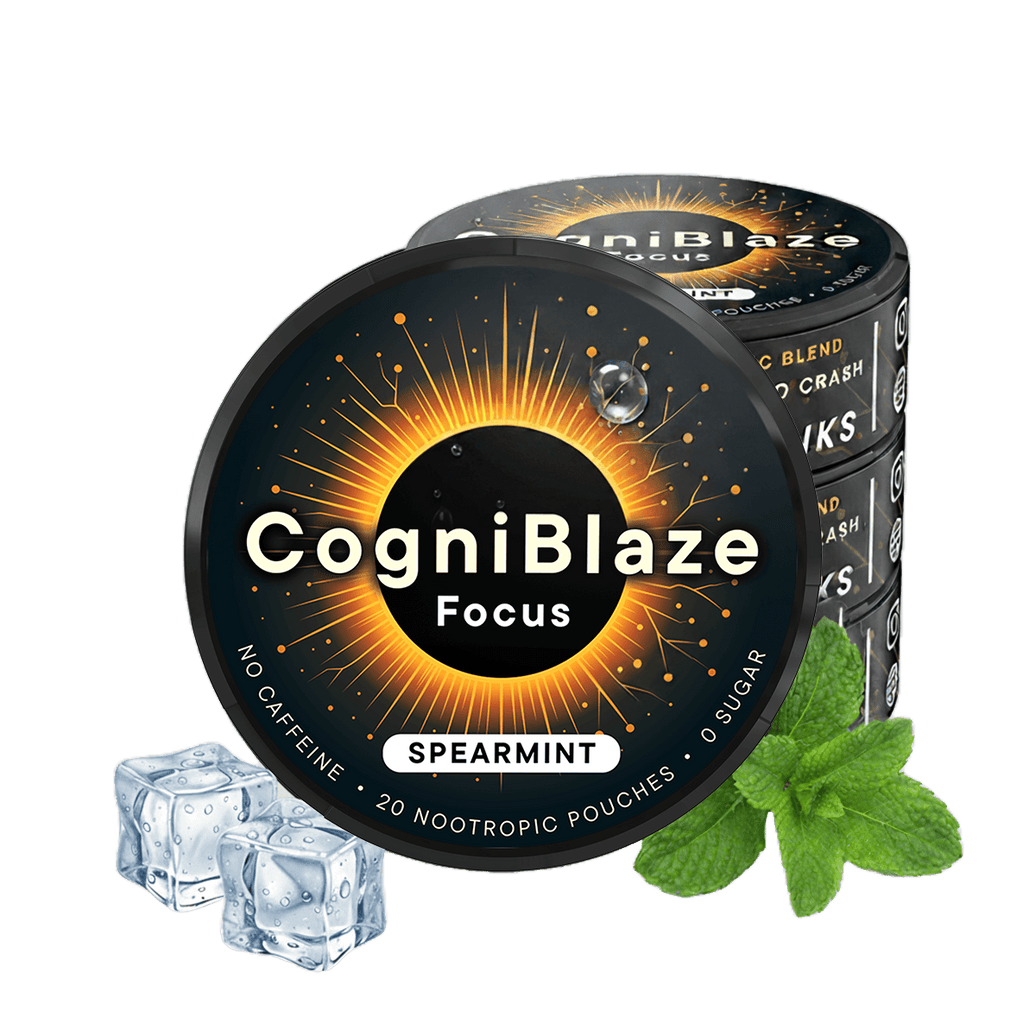
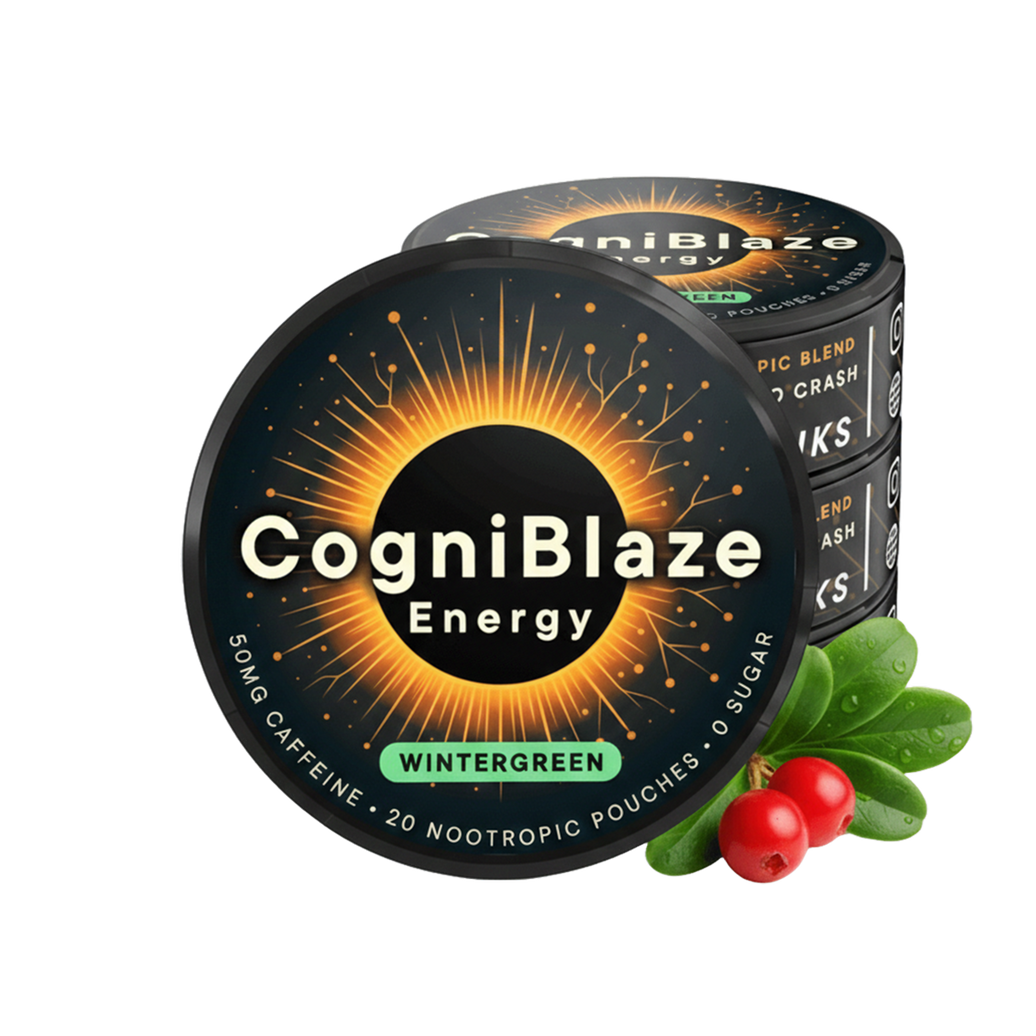
At CogniBlaze, our pouches are nicotine-free and tobacco-free. Our Energy Pouches contain caffeine alongside L-Theanine, Alpha GPC, and L-Tyrosine, while our Focus Pouches are caffeine-free and use L-Theanine, Alpha GPC, L-Tyrosine, and Huperzine A.
Whatever type of pouch you’re considering, the basic rule is simple: look beyond the category name and read what’s actually inside it.
This article is for general educational purposes and is not intended as medical advice.
Sources & Further Reading
1. Nicotine Pouches — Centers for Disease Control and Prevention
CDC: Nicotine Pouches
2. Other Tobacco Products — U.S. Food & Drug Administration
FDA: Other Tobacco Products
3. Nicotine Is Why Tobacco Products Are Addictive — U.S. Food & Drug Administration
FDA: Nicotine and Addiction
4. The Relative Risks of Tobacco Products — U.S. Food & Drug Administration
FDA: Relative Risks of Tobacco Products
5. A Systematic Review and Meta-Analysis of the Acute Effect of Caffeine on Attention — Psychopharmacology, 2025
PubMed — PMID 40335666
6. Cognitive and Affective Effects of L-Theanine: A Systematic Review and Meta-Analysis of 31 Randomized Trials — Molecular Psychiatry, 2026
PubMed — PMID 42410082
7. Spilling the Beans: How Much Caffeine Is Too Much? — U.S. Food & Drug Administration
FDA: Caffeine Guidance